
Description
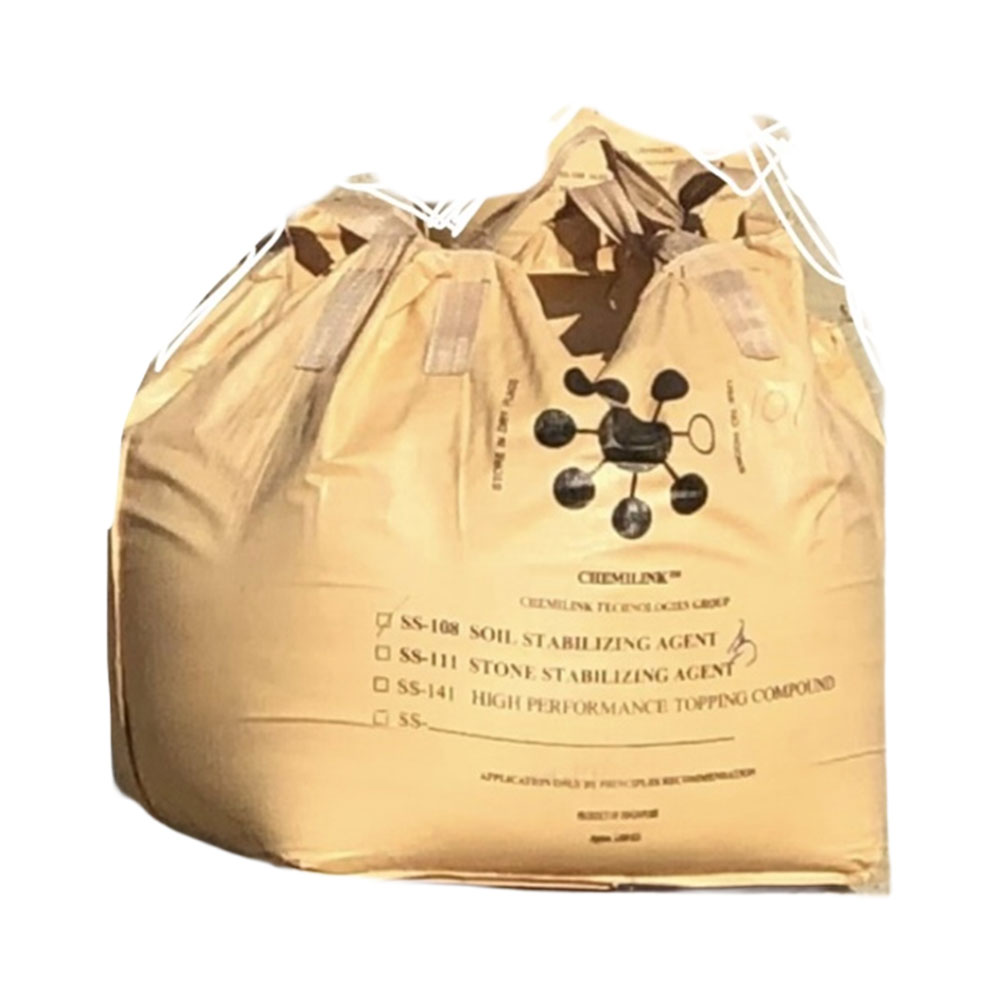
Our principal stabilization agents SS‑108 for soil and SS‑111 for stone (newest merged) are high‑performance powder‑based additives designed for modern ground engineering.
A New Generation of Base and Sub‑Base Construction
Leveraging advanced stabilization technology, our method replaces conventional techniques used in civil infrastructure projects:
- Highways and expressways
- Airfields and runways
- Seaport container yards
- Urban and rural roads
- Shallow foundations
- Etc.
By applying SS‑108 (SS‑111 merged), existing local soils and crushed stones can be effectively stabilized, strengthened, and rehabilitated to form the ideal base and/or sub-base of the infrastructural projects. This eliminates or greatly reduce the need for imported large quantities of sand and aggregates with better performance.
Key Advantages
1. Superior Technical Performance
Enhance load‑bearing capacity, durability, and long‑term stability, achieving performance levels exceeding the conventional granular materials.
Creates a unique semi-rigid Platform to reduce total and differential settlement and achieve stable construction over soft ground with superior anti-cracking performance.
Reliable in Extreme Conditions: Specially formulated for tropical regions with high water tables and heavy rainfall, as well as weak, peaty, or swampy soils.
2. Significant Cost Savings
Minimizing the import and transport of construction materials leads to substantial reductions in overall project cost, logistics complexity, and execution time.
3. High Workability & Construction Efficiency
The powder‑form agents are easy to transport, mix, and apply, making them suitable for a wide range of soil conditions and climates.
- Flexible Application: both cold deep in-situ mixing and central mixing plant methods.
- Efficiency in Tight Windows: Offers excellent workability for high-pressure environments, such as airport runway rehabilitations that must be completed under strict operational timeframes.
4. Environmental Sustainability
By maximizing the use of in‑situ materials, it reduces carbon emissions, quarrying activities, land disturbance, and waste generation.
5. Proven Across Asia‑Pacific
This technology has been validated through hundreds of successful infrastructure projects of airport runways, taxiways, highways, seaport container yards, shipyards, heavy-duty parking yards, and other shallow-base foundations, since 1994 across the Asia‑Pacific region—from the humid, tropical climates of Southeast Asia to high elevations of Mongolia. The performance has been consistently demonstrated in diverse and challenging environments.